
Bone broth for fertility health, pre-natal support and postpartum recovery.
Across almost every traditional food culture, the meal given to a woman after birth is a slow-simmered broth. There is good sense in that, and it is worth being precise about why.
8 min read

Why broth, through every stage
Preparing for pregnancy, carrying a child and recovering from birth are each, in their own way, a call on the body's reserves. Bone broth meets that call directly. Slow-simmered for 36 hours, it draws collagen, gelatine, glycine and minerals out of the bones and into a form the body absorbs easily — the same building blocks the body is spending as skin stretches, a baby grows and tissue repairs.
A single 250ml cup carries 12 to 15 grams of protein alongside calcium, magnesium and phosphorus, with none of the effort of a heavy meal. That matters when appetite is low, when nausea makes solids difficult, and when you are doing the most demanding work of your life with one hand free.
Trying to conceive
Preparing for pregnancy is mostly about the unglamorous baseline: enough protein, enough minerals, stable blood sugar, and enough rest. Bone broth contributes to the first two. Its collagen and glycine support the gut lining and tissue health that underpin hormonal balance, and its minerals feed the quietly demanding work of building a healthy baseline.
It is also warm, savoury and easy to keep up on days when appetite or motivation is low — and for anyone going through fertility treatment, low-effort nourishment has real value. Our Beef, Ginger, Spring Onion & Shiitake blend is rich in the folate, zinc and iron that pregnancy quietly depletes, reached for in Chinese medicine to rebuild the deepest reserves. What broth cannot do is treat a fertility issue. Folate, iodine, iron and vitamin D remain the province of your clinician and your pre-natal supplement.
In almost every food culture, the first meal after birth is a broth. Practicality and tradition arrived at the same answer.
During pregnancy
Protein needs rise through pregnancy, and so does the body's demand for the raw material of connective tissue as skin, uterus and ligaments stretch. Collagen and gelatine — the heart of a long-simmered broth — are exactly that material. A cup of broth is an easy way to add protein and collagen without adding a heavy meal, which matters in the first trimester, when nausea makes solid food difficult, and in the third, when there is simply less room.
The Chicken, Lotus, Cordyceps Flower & Jujube blend was built for this stretch. In Chinese tonic medicine, jujube is known as the womb fruit and is the natural choice for pre to post-natal support, while cordyceps flower rebuilds the energy reserves that pregnancy draws down rather than masking the dip. It is the broth we reach for when the body is doing the slow, quiet work of growing and sustaining another life.
- Heat until steaming hot every time, and do not reheat twice.
- Thaw in the fridge overnight, never on the counter.
- Once opened, keep refrigerated and finish within four days.
- Watch total sodium if you have been advised to, and choose an unsalted broth if so.
- Check with your midwife before adding any adaptogenic or herbal blend — our Chicken, Lotus, Cordyceps Flower & Jujube contains tonic herbs, so ask first.
The fourth trimester
The postpartum weeks are where broth earns its reputation. Recovery from birth is tissue repair on a significant scale — collagen and glycine are the very nutrients that work is made of. Breastfeeding raises energy and fluid needs sharply. And you are doing both while unable to reliably use two hands or eat sitting down.
A warm cup of broth solves a practical problem before it solves a nutritional one. It is protein, fluid, minerals and warmth in something that can be drunk with one hand at three in the morning. Many cultures pair it with rice or greens for exactly this reason: it turns into a meal with almost no effort.
Through early recovery, the Chicken, Lotus, Cordyceps Flower & Jujube blend is the one Chinese medicine turns to after birth — lotus seed settles the nervous system, jujube nourishes the blood, cordyceps flower rebuilds spent energy. As appetite returns and iron-rich savour feels welcome, the Beef, Ginger, Spring Onion & Shiitake blend brings depth and warmth, with shiitake's beta-glucans supporting immune resilience when yours is lowest.
- Keep jars in the freezer before the birth; thaw two at a time.
- One to two cups a day through the first six weeks is a common rhythm.
- Poach rice, greens or dumplings in it to turn a cup into dinner.
- Ask visitors to bring or send broth rather than flowers.
If you are breastfeeding, keep total protein and fluid intake up across the day — broth is one contribution, not the whole plan.
Which broth, and when
Pure Chicken is the simplest choice through pregnancy and early postpartum: pastured bones and filtered water, no salt, no onion, nothing else, so you control the seasoning entirely. The Chicken, Lotus, Cordyceps Flower & Jujube blend is the restorative one — traditionally used in postpartum recovery in Chinese food culture, and worth a conversation with your midwife first. The Beef, Ginger, Spring Onion & Shiitake blend gives more depth and iron-rich savour once appetite returns, and is particularly valued through pregnancy and post-natal recovery.
This is general information, not medical advice. Nutrition during fertility treatment, pregnancy and the postpartum period should be discussed with your midwife, doctor or dietitian — particularly if you have been advised to limit sodium, protein or specific foods.
Common questions
- Is bone broth good for postpartum recovery?
- It provides collagen, glycine, protein, fluid and minerals in a warm, easily digested form that can be drunk one-handed — which is why it appears in postpartum traditions worldwide. The collagen and glycine it carries are the same building blocks tissue repair is made of. It supports recovery as food; it does not replace medical care or your clinician's advice.
- Is bone broth safe during pregnancy?
- Bone broth is a normal food and is generally considered safe in pregnancy when it is stored correctly and heated until steaming hot. Check herbal or adaptogenic blends with your midwife, and follow any sodium advice you have been given.
- Can bone broth help with fertility?
- There is no evidence that bone broth treats fertility problems. It contributes protein, minerals and collagen to a well-fed baseline, which is a sensible part of preparing for pregnancy alongside the supplements your clinician recommends.
- How much bone broth should I drink after giving birth?
- One to two 250ml cups a day through the early weeks is a common and reasonable amount, alongside regular meals and plenty of fluid.
- Which bone broth is best while pregnant or breastfeeding?
- An unsalted, single-ingredient broth like Pure Chicken gives you full control over seasoning and avoids herbal additions. Our Chicken, Lotus, Cordyceps Flower & Jujube blend is traditionally used for pre to post-natal support — ask your midwife before choosing a tonic-herb blend.
Start the routine
Recommended broths


Keep reading
More from the Journal
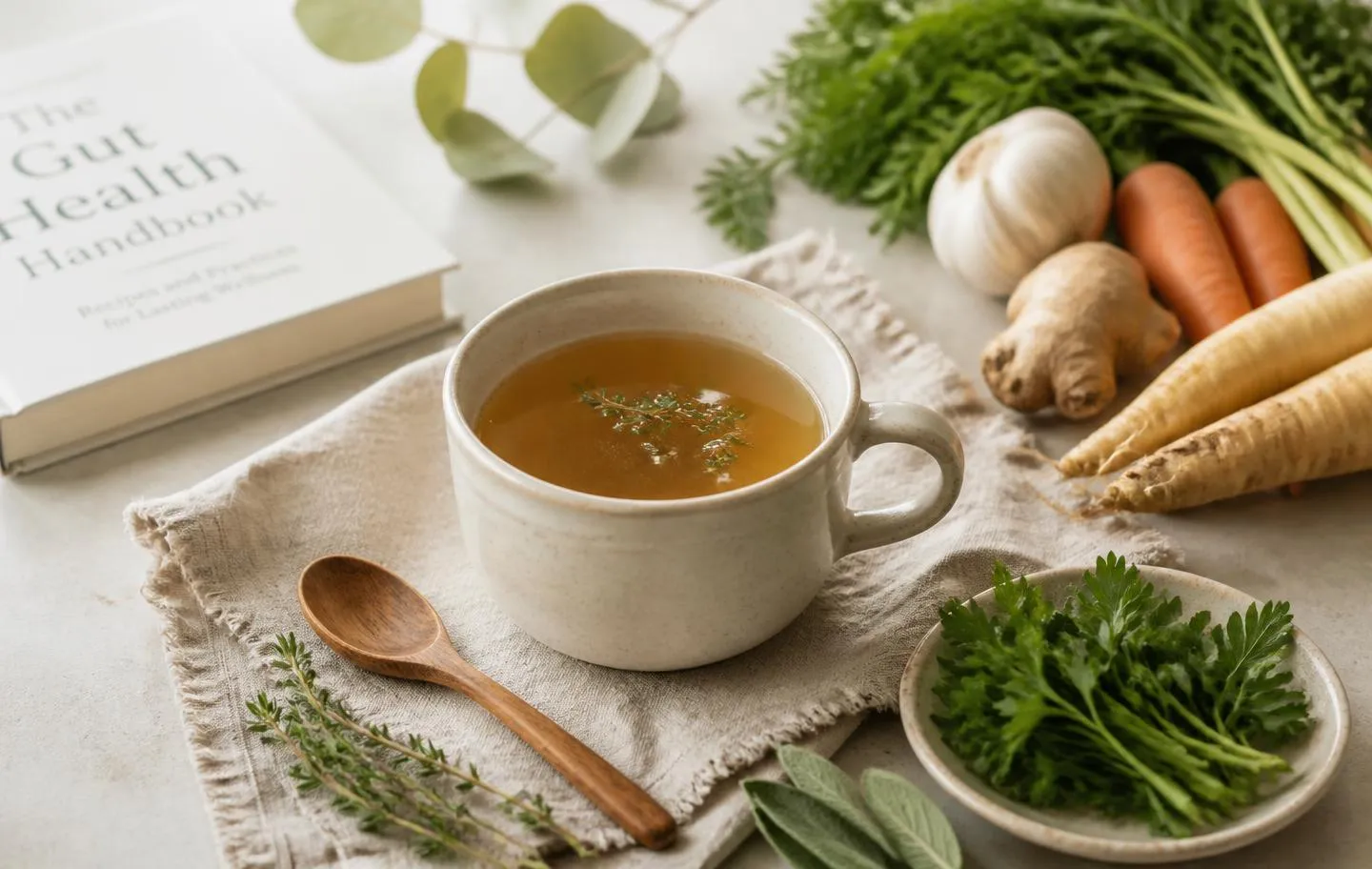
Gut · 7 min read
Bone broth for gut health: what the body actually needs
The gut does not ask for complicated protocols. It asks for consistent, whole-food nourishment. Bone broth is one of the simplest ways to deliver it.
Read the article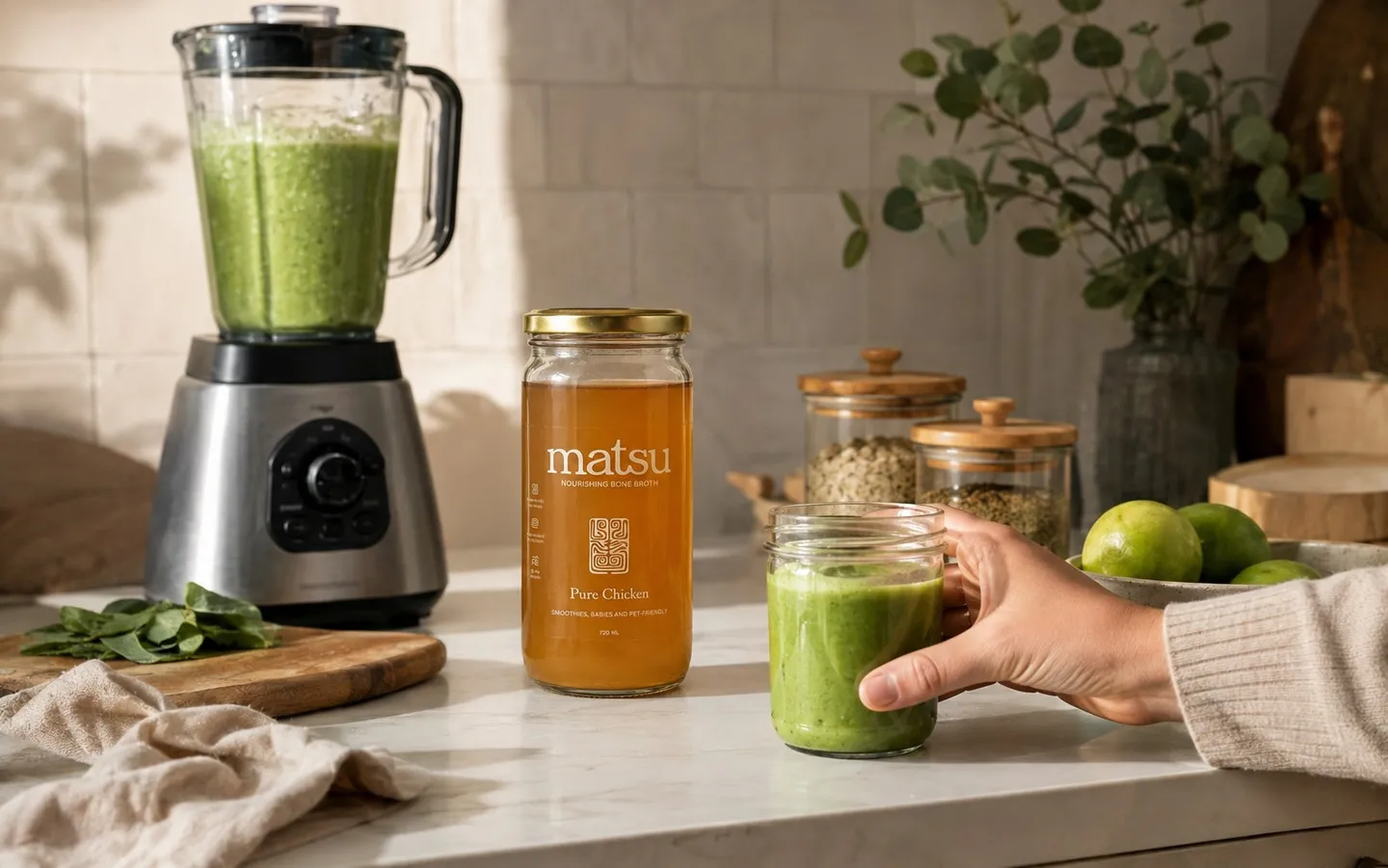
Recovery · 7 min read
Bone broth for athletes: train better, recover well
Training breaks tissue down. Recovery is where the adaptation happens — and connective tissue is the part most training plans forget to feed.
Read the article
Sleep · 6 min read
Bone broth for sleep: the restorative evening cup
Most sleep advice is about what to remove. This is about what to add — a warm cup that shapes a good night's sleep.
Read the article