
Bone broth for athletes: train better, recover well.
Training breaks tissue down. Recovery is where the adaptation happens — and connective tissue is the part most training plans forget to feed.
7 min read
What training asks of the body
Muscle gets the attention, but tendons, ligaments, fascia and cartilage carry a large share of the load in running, lifting, surfing and court sport. Those tissues are mostly collagen, they turn over slowly, and they respond to consistent nutrient supply rather than a single big meal.
Alongside that, hard sessions cost fluid and electrolytes, and often blunt appetite for an hour or two afterwards — exactly the window when the body is most receptive to nourishment.
Where bone broth fits
Bone broth is made by simmering bones and connective tissue for many hours with a splash of apple cider vinegar. The long heat converts collagen into gelatin and draws minerals into the liquid. What you get is nourishing, easy-to-drink protein — between 17 to 33 grams in our jars, most of it collagen.
- Glycine and proline — the amino acids collagen is built from, supplied in food form.
- Fluid and minerals — a warm cup rehydrates in a way a cold shake often does not.
- Low digestive load — liquid nutrition sits easily when appetite has not returned.
- No sugar, no sweeteners, nothing to spike or crash.
Collagen is not a complete protein — it is low in tryptophan — so it works as an addition to your protein intake, not a substitute for it. Think of it as the connective-tissue half of the equation, sitting alongside whatever complete protein you already eat.
Recovery is not one meal. It is the sum of what you manage to take in on the days you are tired.
How to use it across a training week
- Before a session: a small cup 45 to 60 minutes ahead — warm, salted, gentle on the stomach.
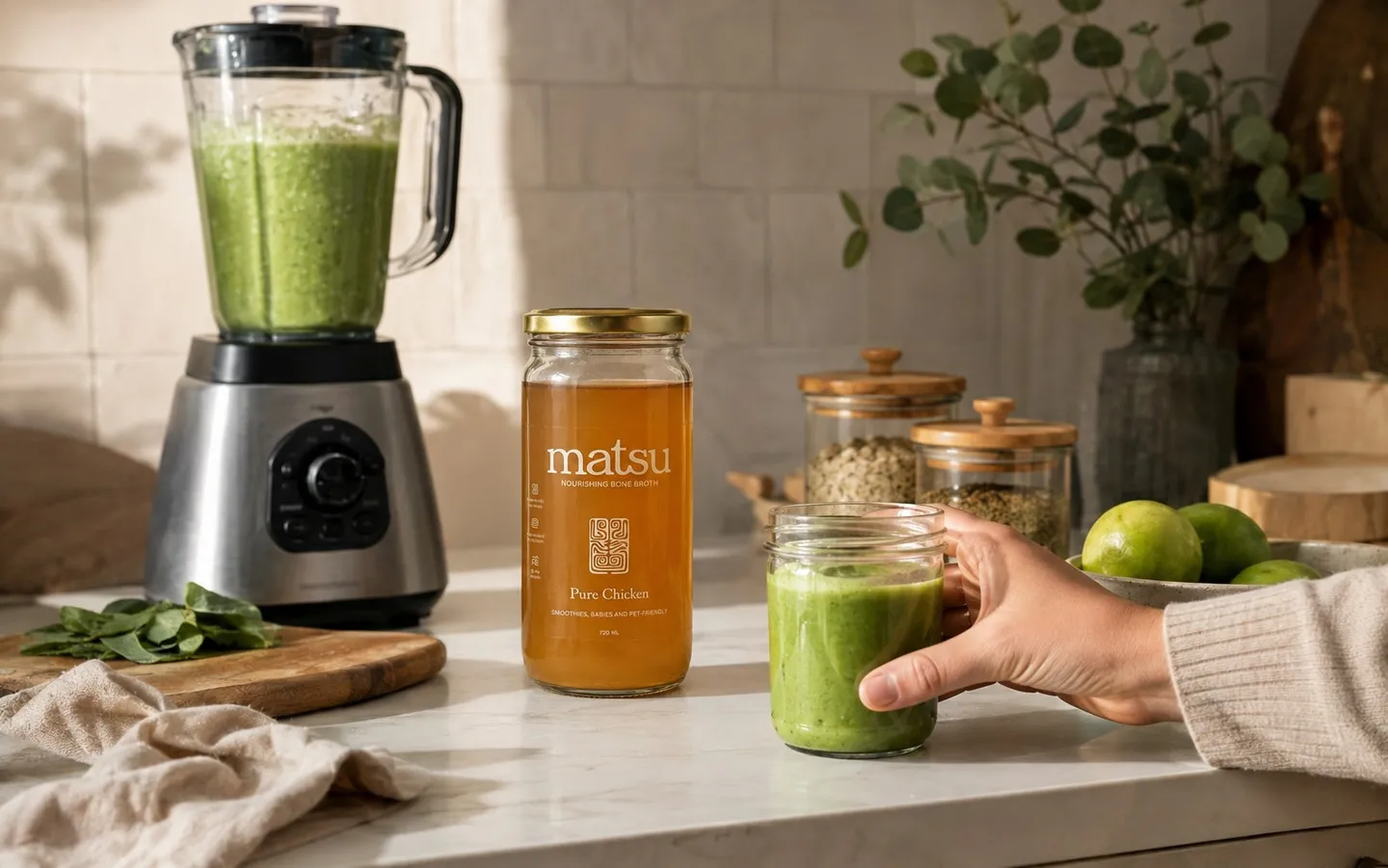
- Straight after: a broth smoothie made with our Pure Chicken while you cool down, then a full meal once appetite returns.
- Heavy blocks: two cups a day on the days you train twice.
- Rest days: one morning cup keeps intake steady while the repair work happens.
- Travel and competition: jars thaw in the fridge overnight and travel better than most recovery food.
What to look for in a broth
Most supermarket broths are cooked for two to four hours, heavily salted, and sometimes carry yeast extract or flavour enhancers. Those are stocks, and they will not deliver the same protein.
- Simmered 36 hours, so collagen has time to convert.
- Grass-fed or free-range bones, and a short ingredient list.
- Sets to a firm gel when chilled — the clearest visible sign of gelatin content.
- Protein per serving stated on the label, not implied.
- For smoothies or a salt-controlled diet, use our Pure Chicken broth that contains no salt, and no onion.
A realistic expectation
Bone broth is not an ergogenic aid and it will not change a session on its own. What it does well is make the boring part of training easier: getting protein, fluid and minerals in every day, especially when you do not feel like eating. Athletes who keep it going tend to report that they feel endurance is better during training, less depleted between sessions and that joints feel better through heavy blocks.
Common questions
- How much bone broth should an athlete drink?
- One 250ml cup daily is a sensible baseline, moving to two cups on double-session or heavy training days. Consistency over weeks matters far more than a large amount occasionally.
- Is bone broth better before or after training?
- Both work. Before training it is a light, warm source of fluid and salt that sits easily. After training it is an easy way to start protein intake while appetite catches up.
- Can bone broth replace a protein shake?
- Not entirely. Collagen protein is low in tryptophan, so it is not a complete protein. Use it alongside complete protein from food or a shake rather than instead of it.
- Does bone broth help sore joints from training?
- It supplies the amino acids connective tissue is built from, which is why many athletes use it through heavy blocks. It is a nutritional input, not a treatment — persistent joint pain should be looked at by a physiotherapist or doctor.
- Which broth is best for training?
- A beef broth for everyday cups, and our unsalted Pure Chicken when you are blending it into a post-session smoothie or controlling sodium yourself.
Start the routine
Recommended broths


Keep reading
More from the Journal
Gut · 7 min read
Bone broth for gut health: what the body actually needs
The gut does not ask for complicated protocols. It asks for consistent, whole-food nourishment. Bone broth is one of the simplest ways to deliver it.
Read the article
Sleep · 6 min read
Bone broth for sleep: the restorative evening cup
Most sleep advice is about what to remove. This is about what to add — a warm cup that shapes a good night's sleep.
Read the article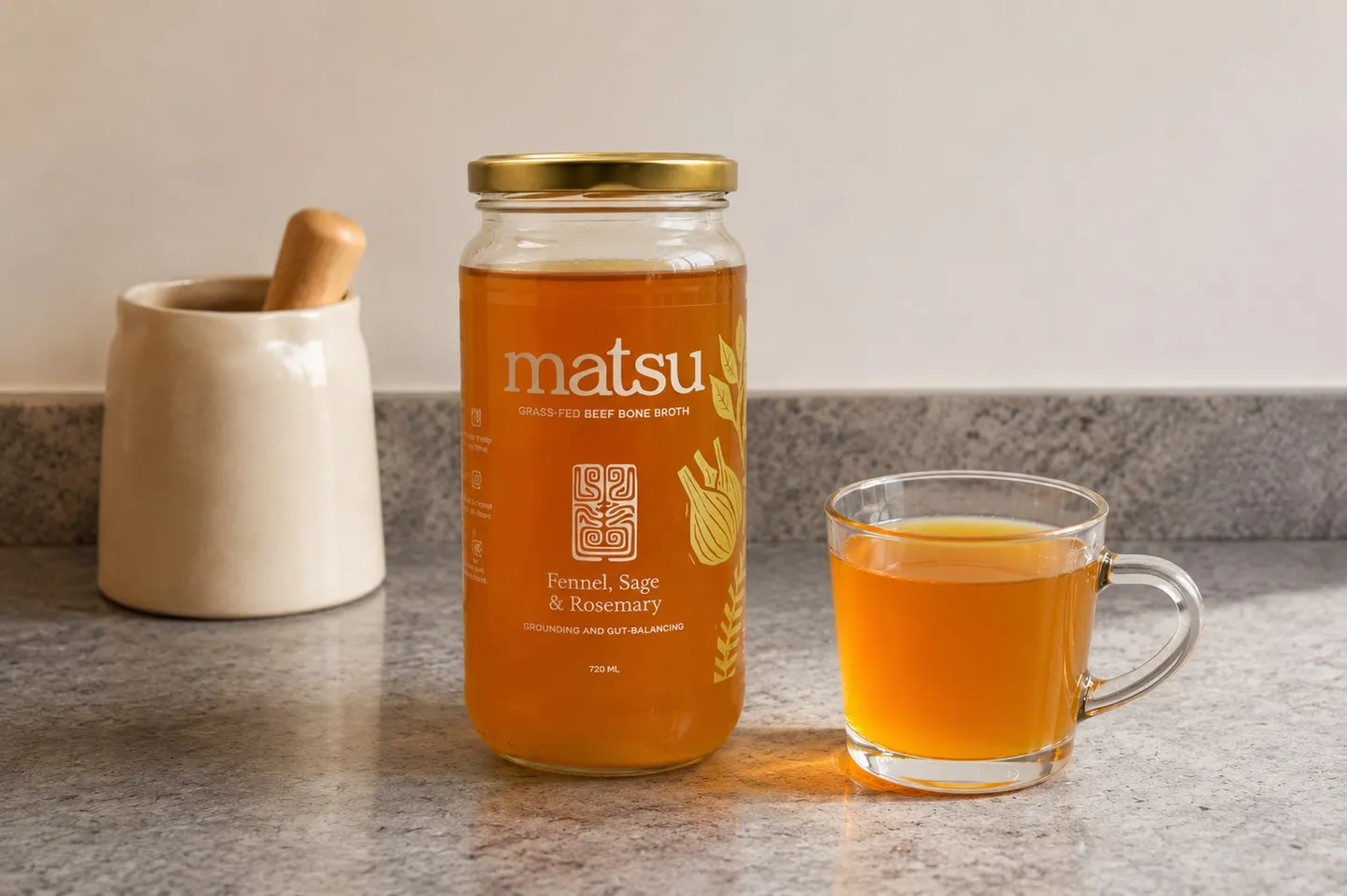
Metabolic · 7 min read
Bone broth on keto and while fasting
Two questions come up more than any other: will it break my fast, and does it fit my macros? Short answers: no, and yes.
Read the article